
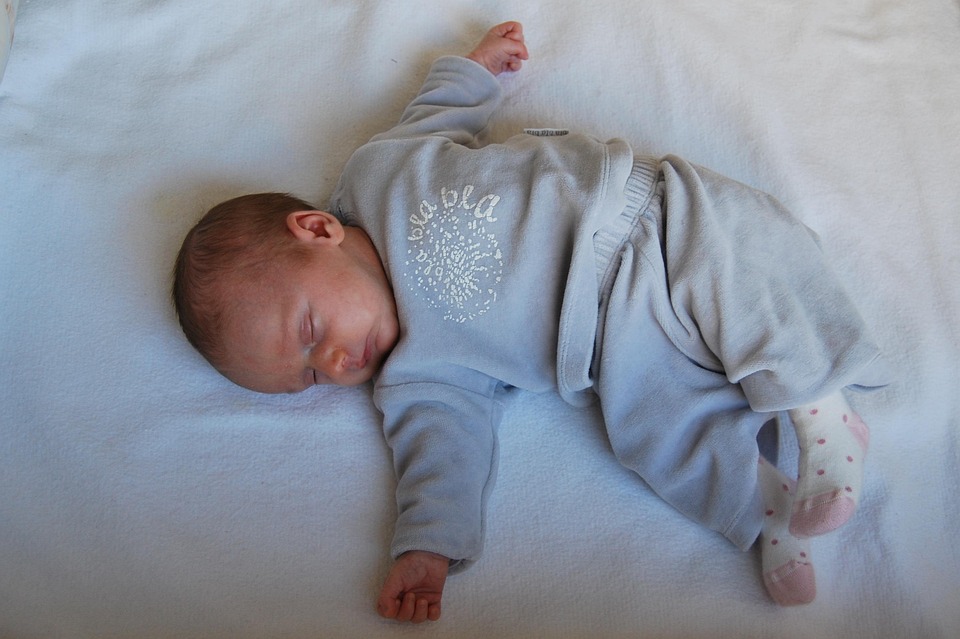
Most babies awaken at the top of a sleep cycle if they're hungry, uncomfortable or if their breathing is obstructed. Research suggests awakening between sleep cycles to be an important survival mechanism. If baby's sleep state was so deep that she couldn't communicate her needs, then her wellbeing might be threatened.
Therefore, parents shouldn't feel pressured trying to urge their neonate to sleep too long, too deeply, too soon. Between 3 and 6 months aged , a sleep pattern usually begins to emerge and baby may sleep for five hours or more.
For most parents, the 2 main problems are becoming their baby to nod off and to remain asleep. Some babies nod off easily and stay asleep while others nod off easily, but awaken frequently. Some babies attend roll in the hay difficulty, but stay asleep, while others don't want to travel to sleep or stay asleep. Babies that were good sleepers at six months aged may develop sleeping difficulties as they get older and the other way around .
There are all kinds of reasons why babies experience sleep difficulties, but knowing something about the various stages of sleep and what to try to to if your baby wakes up within the night are often helpful.
Babies experience five cycles of sleep, with all lasting about one hour. They spend twice the maximum amount time in light and active sleep than deep sleep. During the primary stage of sunshine sleep, baby's muscles relax and her eyelids flutter. She may twitch, grimace, suck intermittently and breathe irregularly. If baby is put in her cot at this stage, she may awaken .
During deep sleep, baby's limbs relax, her fists unfold and her breathing becomes shallow and regular. After deep sleep, babies enter the frenzied period of active sleep. During this stage, they grimace and fuss, the muscles tighten and jerk involuntarily, the eyes dart about altogether directions and breathing and pulse become irregular. However, the amount between the top of active sleep and therefore the next cycle of sleep is that the most vulnerable one.
Most babies whimper and fuss once they awaken after a sleep cycle. However, if undisturbed, they'll drift back to sleep again. If your baby should need feeding or a nappy change, keep this as low-key as possible and put her in her crib or cot as soon as her needs are met. If your baby isn't hungry or uncomfortable, don't pick her up, speak to her, make eye contact, placed on music or lights or interact together with her in any way or she is going to expect an equivalent treatment whenever that she wakes up.
Simply place your hand on your baby to comfort her until she falls asleep again. After a couple of days, she is going to get wont to the new routine and can settle back to sleep again on her own. If you reward your baby with an excessive amount of attention, waking and play at odd hours could also be prolonged into late childhood.
Bedtime routine
The one thing that the sleep experts all agree on is that the need for a uniform , predicable, regular bedtime routine. It doesn't matter what the routine consists of providing an equivalent things happen nightly . Your baby will soon learn to associate certain events and situations with bedtime, although it's going to take every week or two for her to develop new sleep habits. Once a routine has been established, persist with it consistently nightly .
Here are a couple of tips which will help:
o Let your baby have an honest kick around to tire herself out.
o Help your baby to relax during a warm bath-when she gets out, the encompassing cooler air will lower her temperature and help trigger the sleep mechanism.
o Massage your baby or read a bedtime story to assist her to unwind and relax.
o Put your baby in special clothes that are only used at bedtime.
o Swaddle your baby during a cotton blanket or place her during a baby bag to remind her of the heat and luxury of the womb.
o Use key words such a 'Bed time' or 'Night-night' in order that your baby associates them with sleep.
o Put your baby down after winding and before she is fully asleep, otherwise she could also be startled to seek out that your comforting arms aren't there when she wakes up.
o Make sleeping within the crib or cot a daily habit.
o confirm the space is dark and quiet. This helps to determine the difference between night and day.
Everyone features a period of sleep latency before getting to sleep, so don't expect your baby to nod off the instant that she is in her cot. Crying for no apparent reason before sleep is additionally normal for many babies. Sometimes, your baby just must unwind after a busy day and crying makes her sleepy.


0 Kommentarer